
By Prithika Hariharan on The Capital
I recently took a course called ‘Personal Finance Essentials’ and thought it would be a good idea to share my learnings with all of you as well in the hopes that it can help someone out!
Debt and Borrowing
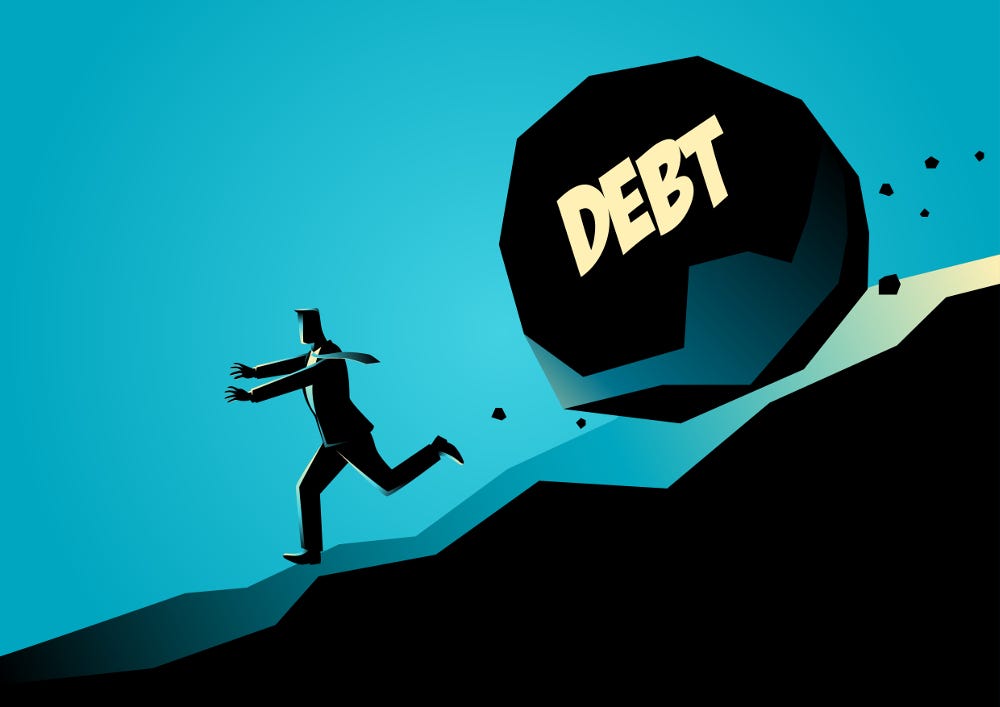
Credit cards can be very powerful tools when used correctly. However, they can be quite dangerous if one is not cautious with the amount of money they spend with it. Before choosing a credit card, it is best that one visits the Government of Canada website to compare credit cards — interest rates, rewards, and cash-backs, and other benefits to decide which one best suits your needs. The interest rates for credit cards are usually between 15–20% (which is a lot, I agree) which is why you should always pay your money back in full.
Check out my presentation here for more details on Credit Cards.
Line of credit is another way to borrow money. This is basically a loan offered by banks which allows you to borrow a predetermined amount of money. It is similar to a debit card and they begin accruing interest immediately. The best way to ensure that you repay the money is to set an overdraft to transfer funds automatically every month. They are better than credit cards because the interest rates are usually lower but the downside is that it could lead to people accumulating a bigger balance.
Other modes are long-term loans which can be obtained provided that you can provide collateral and mortgages. Mortgages are loans specific to real estate and the property the borrowed money is used towards buying will serve as the collateral. A minimum down payment has to be paid and the smart course of action would be to obtain mortgage loan insurance as well. Since the amount that you will pay due to interest is significant, borrowers can choose variable or fixed rates. Fixed rates are a flat interest rate that will remain the same throughout the period of your repayment while variable rates fluctuate based on the interest rates currently in the market. If a borrower is unhappy with the rate chosen, they can pay additional fees to make any changes.
Credit Scores can be very crucial when you are applying for a loan from a bank. Credit scores are usually three-digit numbers between 300–900. Your credit score is determined from your credit history(or credit report) which is available to banks and telephone service companies among others. Your credit report will outline the type of credit you use, your credit score, and your behavior as a user. The higher your credit score, the more likely it is for a loan application to be approved by the bank.
Some rules to follow when borrowing money:
- Live within your means
- Always ensure you are using debt wisely
- You need a solid plan!
Your Money: Today and Tomorrow
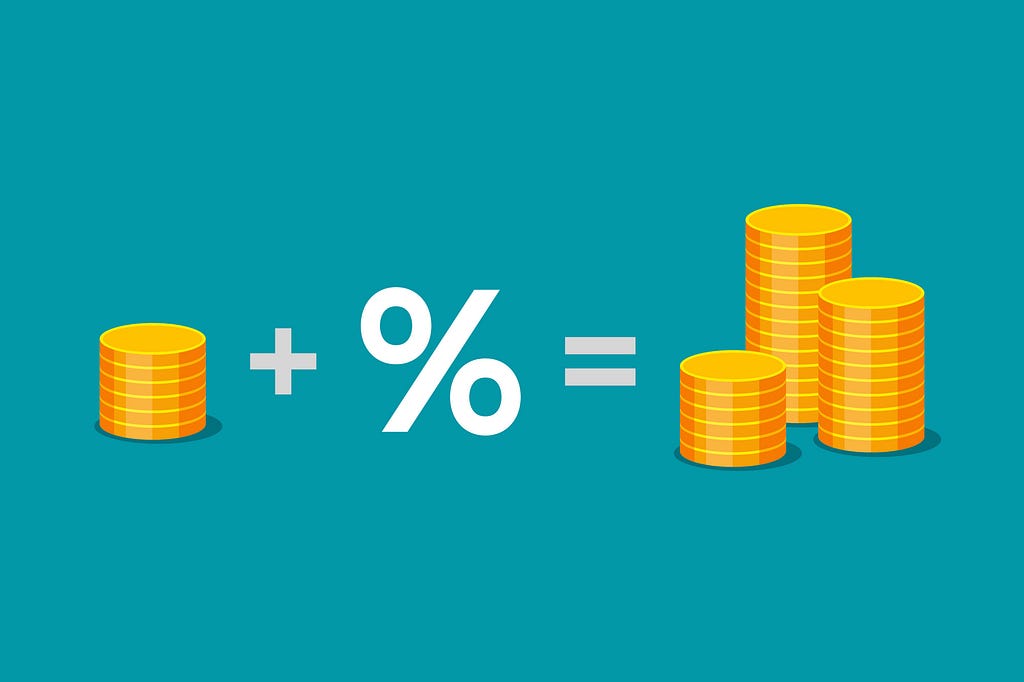
Any amount of money is worth more now than later. This is because of compounding. Due to compounding, the longer you leave money in the bank, the higher the interest earned, and hence, the more it will be worth in the future.
- Formula to calculate the Future Value of money:
FV = PV*[(1+r)^t]
Where:
FV — Future Value
PV — Current Value
r — interest rate (in decimals)
t — the number of time periods
- Higher r and t -> Higher FV
It is very important to note that one can only compare dollar values at the same point in time.
- How can we calculate Present value?
Discounting is the opposite of compounding. The Formula to find the present value is derived from the formula above.
PV = FV/[(1+r)^t]
Where:
FV — Future Value
PV — Current Value
r — interest rate (in decimals)
t — the number of time periods
Budget Building

Why should one budget?
Budgeting is very important in one’s journey towards financial stability and independence. This is because it helps one layout a solid plan that can be modified throughout one’s life to keep them on track to save a specific amount every month towards a specific goal.
We are aiming for surplus which essentially means that our income (money in) is greater than our expenditure (money out).
Budgeting Tips and Tricks:
Preparing:
- It is important to have a vision statement with adequate flexibility to accommodate different paths you may take to achieve your financial goals,
- You will require additional information regarding where you are now financially and where you would like to be in the future (5/10 years).
- List out potential blockers and challenges you may face across the face and how you intend on tackling them.
- Finally, create a list of stakeholders. Stakeholders are the people who want the best for you and are willing to support and guide you through your financial journey.
Analyzing:
- This is the stage where you will reach out to stakeholders and establish long-lasting relationships. Connect with them on a personal level and be in a position where you are able to reach out to them for financial guidance.
- Calculate your revenue and expenditure. Have a clear understanding of your sources of income and where you tend to spend most of your money. Begin looking for trends and always keep a keen eye on your expenditure.
Deciding:
- Finalize the 3-year vision — where do you want to be and what situation would you like to be in (financially)?.
- By now, you should have spent quite a bit of time analyzing yourself as well as your spending habit. This should have helped you determine what your challenges.
- Finally, develop your strategies — how you can best handle challenges as they come.
The key steps that once can take immediately/very soon towards their goals are:
- Achieving quick wins and celebrating them as they come
- Listing 2–3 steps that you can take in the next month to advance
- Using KPIs (Key Performance Indicators):
- Track your progress
- E.g: Bank Balance, Savings
Investing
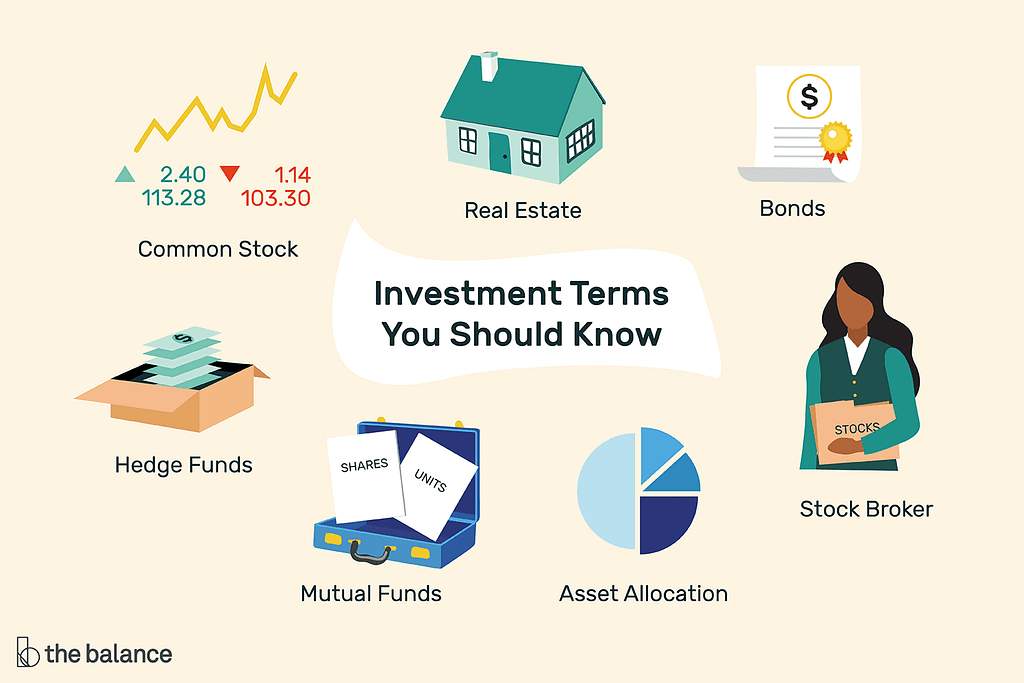
What are your investment options?
1. Stocks vs. Bonds
When you buy stocks, you are buying a portion of the company. Stocks usually offer higher returns (about 8% on average). Stocks are quite risky investments which is why one must accept the possibility of bear markets or market crashes before they begin investing in stocks. However, because investors take on higher risk when they buy stocks, the return is also much higher.
Bonds are essentially when you lend money to the companies and it is guaranteed that you will be paid back in full with the interest rate. Investing in bonds is almost as safe as holding on to the money in your savings account. Usually, the return is between 0.5 and 3% since the risk related to bonds are very low.
2. Mutual Funds
Other options include Open Brokerage accounts and Mutual Funds. Mutual Funds are when companies invest on our behalf. There are two different kinds of MF’s — passive and active.
Passive Mutual Funds means that our money will be used to invest in stocks that have historically proved to do well and the fluctuations of the stock market will not be watched that closely. However, Active Mutual Funds are when our money is used to invest in stock doing well and the fluctuations and trends of the stock market are also closely monitored to pick up on cues and improve our investment portfolio.
Investing Mistakes:
Some common investing mistakes include:
- Buying high and selling low
- This should be avoided as much as possible. The best course of action is to ‘Buy Low and Sell High’.
- Not investing when the markets are depressed
- Buying/Selling based on the market’s mood
These are common mistakes that people fall victim to. The best way to do this is to research, learn more about the stock market, pay attention to trends, listen to other people’s opinions but ultimately, make the final decision based on your learning and with your best interests in mind. It is also important to remember that the stock market can do poorly in the long term. Though we have seen that the stock market always recovers after a huge crash, it is not guaranteed.
Investing — continued
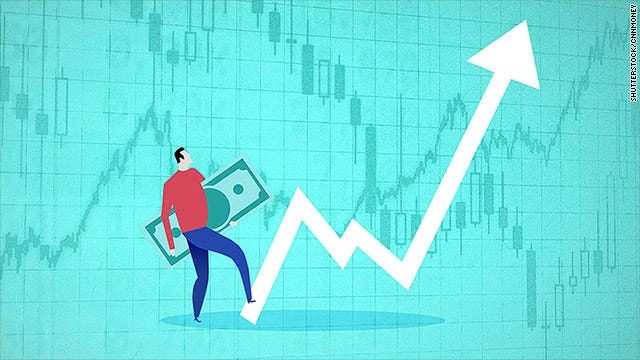
It is important to consider the money you make after the taxes are applied because this is the money that you can ultimately use to invest or save. For progressive income taxes in Canada, if the amount deposited is greater than the basic/standard amount, the tax increases and you will progressively begin moving into different tax brackets. The higher your salary is, the higher the incremental tax applied to your investment income.
Paying down debt as an indirect investment is a very good strategy. This is because interest saved on paying down debt is not tased. This is why one must consider doing this first and then use the additional money for investment.
There are government incentives in place to exempt or defer taxes. There are two different options that are readily available to people in Canada — TFSA and RRSP.
TFSA
- Investments earn income tax-free
- Money withdrawn will not be taxed
- Accounts have a contribution limit (around $500/month and $6000/year)
RRSP
- Investments earn income tax-free
- Allows for taxes to be delayed or deferred
- Once removed from the account, all of the money will be taxed at the individual’s marginal tax rate in that year
It is important to remember that contributions or amounts that are higher than the eligible amount will be TAXED. The money deposited in TFSAs and RRSPs can be used towards GICs, stocks, bonds, and mutual funds among other options.
Advantage: After-tax % return without a TFSA/RRSP << that with TFSA or RRSP.
Real Estate

Why real estate?
There is a potential of capital appreciation which can be very useful for the future. It provides home-owners with leverage to use borrowed money in the form of a mortgage. Homeowners also enjoy tax advantages and it provides diversification benefits.
There are several factors that one must consider when looking to buy properties:
- Location
It is important to look at the population and income growth of the city when looking for properties to buy. Try to look for locations that are financial centers (e.g. NYC).
Growing city -> growing population -> more tenants -> more opportunity
2. Macroeconomic factors
Macroeconomic factors must be taken into account when considering the timing of the investment. The mortgage rate is inversely proportional to house prices and ensures that you do adequate research. For example, constraints on the location are something else to consider. For example, property in Honolulu is very expensive because it is an island and has a volcano that takes up most of the available land. On the other hand, Chicago is a hub for innovation and growth but offers reasonable prices since there is a lot of flatlands.
3. Micro factors
Questions to ask yourself are: Where do I want it? What kind of property do I want?
Important things to look out for are up and coming neighborhoods because this provides opportunities for population growth which ultimately leads to more tenants and more income as well. Established neighborhoods are also good investments since they provide strong and stable income streams due to a lot of amenities and a lot of people.
In a spot like Silicon valley with a lot of tech companies, it would be a good idea to invest in smaller apartments — one or two-bedroom apartments because most of the employees in these companies are usually younger adults or married couples who do not have kids yet.
Finally, the price has to be right for the size of the property. It is also important to ensure that you are not buying very old properties because they usually come with a very high maintenance cost. It can also be beneficial to invest in interesting projects since there is the potential for the value to increase (capital appreciation).
Rent vs. Buy:
To determine whether it is better to buy or rent, find the relationship between housing expenditure and income. A guideline to follow is if you are investing more than 30% of your income on buying a house, you are already spending too much and it would be better to rent instead. If the price/rent ratio is higher, it is more beneficial to rent. Other factors to consider would be other housing expenditures, the time horizon of the real estate investment, and down payment.
Alternate ways to invest in the real estate market are REITs. REIT stands for Real Estate Investment Trusts and history has shown that they are very good investment vehicles.
Behavioural Finance

It is important to consider what kind of investor you are. Ask yourself questions like “How much do I dislike risk or uncertainty around financial investments?”
There are several factors that usually affect how risk-averse you are:
- Level of wealth
- Usually, with higher wealth, people tend to take on higher risk since they have something to fall back to
- Age
- Younger investors can afford to take more risk since they have higher flexibility and can afford to rely on future employment income
- Personal situation and liquidity needs
- Personality
Common psychological mistakes:
- Conservatism Bias
This is when investors tend to underreact to changes and opportunities. A good tip to combat this is to imagine that the information you just heard is the first thing you heard and then, use your prior views to reach a final decision instead of solely basing all your decisions on a single view.
2. Representatives (stereotyping)
This is when people tend to believe that a company will stay on the same trajectory simply because it has been doing consistently well.
3. Disposition event
This is the tendency of investors to sell stocks and hold on to underperforming stocks. One reason could be that they do not want to come to terms with the fact that they made a bad investment.
4. Biased self-attribution
When a stock does well, investors believe that it is due to their skill and pat themselves on the back. However, when stocks do not do so well or underperform, they blame their luck. This can lead to overconfidence and making rash decisions.
5. Emotion of fear
People tend to make rash decisions like selling everything in their portfolio during a market crash and end up losing quite a bit. A good strategy is to avoid making important financial decisions when experiencing extreme emotions and to wait until you are calm and can make rational decisions.
Active investing/trading (quantitative) strategies
It is not advised to implement these strategies on your own and is recommended to seek professional guidance.
Momentum trading
- Invest in a basket of stocks (winner stocks) that have been doing well in the past few months
- Exploits conservatism bias
Post-earnings announcement drift
- Stock prices continue drifting in the same direction as their initial price reaction after an earnings announcement
- Exploits conservatism bias
Thank you so much for getting this far! I hope you were able to obtain valuable insights from this blog and I wish you luck in your financial journey!
https://twitter.com/thecapital_io
Personal Finance Essentials was originally published in The Capital on Medium, where people are continuing the conversation by highlighting and responding to this story.
from The Capital - Medium https://ift.tt/3eqPpbL


0 Comments