The US Fed and Government recently embarked on the largest stimulus spending ever, dwarfing QE1-QE3, what does it mean for bitcoin?
Disclosure: I drafted this quick opinion piece back in March/April 2020 as a self-reflection on the enormous stimulus spending ticket of the US Federal Reserve and Government, and its potential impact on Bitcoin pricing. Consider my points here as put forward during that time frame. I welcome any constructive feedback!
Quantitative Easing
Stimulus spending, also known as quantitative easing or QE, has been around for years, at least in the US. Japan started engaging in this practice in the early 2000s. In the United States, it started in the aftermath of the 2008 financial crisis. I actually wrote my Master’s Thesis about QE in 2011, for the famed economist Paul De Grauwe.
In the face of a crisis, the collapse of financial institutions goes hand in hand with a high degree of economic uncertainty, and people and businesses tend to hoard their money instead of spending or investing it. Because of this underspending, producers are then forced to lower prices in order to clear inventories. Subsequently, because of these lower prices, people start to hoard even more, as they expect their dollars today will be able to purchase even more tomorrow. The more this happens, the more the economy will come to a halt.
To avoid a recession and keep liquidity and spending power in the market alive, the US Federal Reserve, for example, will typically print new money and inject it into the economy. In practice, what happens is that the Fed purchases debt instruments such as junk bonds or treasury notes from banks, and in return, it will give them liquid cash. This will clean up the banks’ balance sheets while the Fed itself will pile up the purchased debt instruments on its own balance sheet. The practice of QE is most often combined with a Zero Interest Rate Policy or ZIRP, to stimulate lending and spending even more.
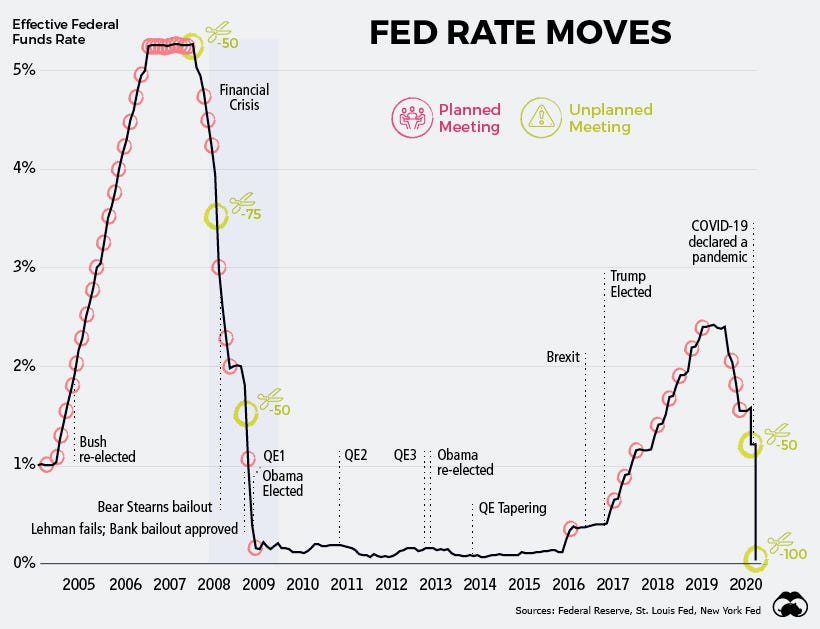
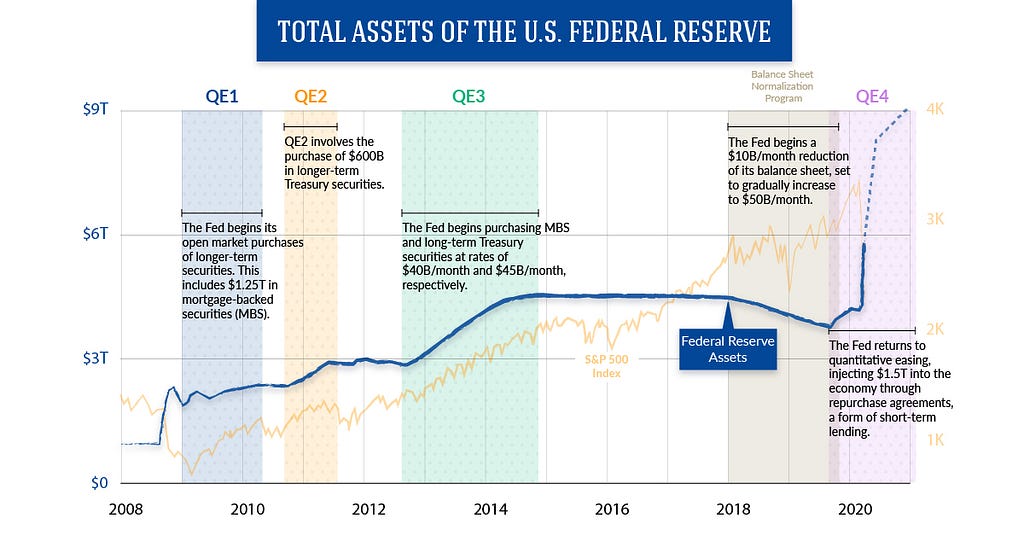
In 2011, I wrote my Master’s Thesis featuring a quantitative model on “The impact of quantitative easing on inflation in the United States and Japan.” In my conclusions, I did not find any significant impact on inflation or any pointers to potential hyperinflation. One of the reasons is that the economy was already deflationary when the US’s QE1 round began. Second, even though the central bank did increase the money supply sharply, banks used these funds to shore up their balance sheets and buffer out toxic assets, rather than creating new loans. If banks would have lent out the money, businesses would have increased operations and hired additional workforce. This would then likely do fuel up prices.
Impact of QE on the Stock Market
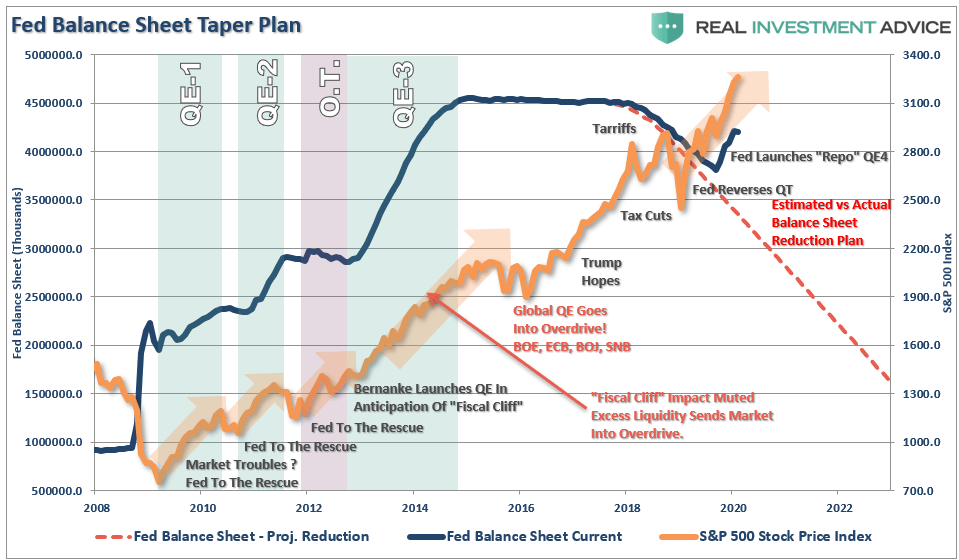
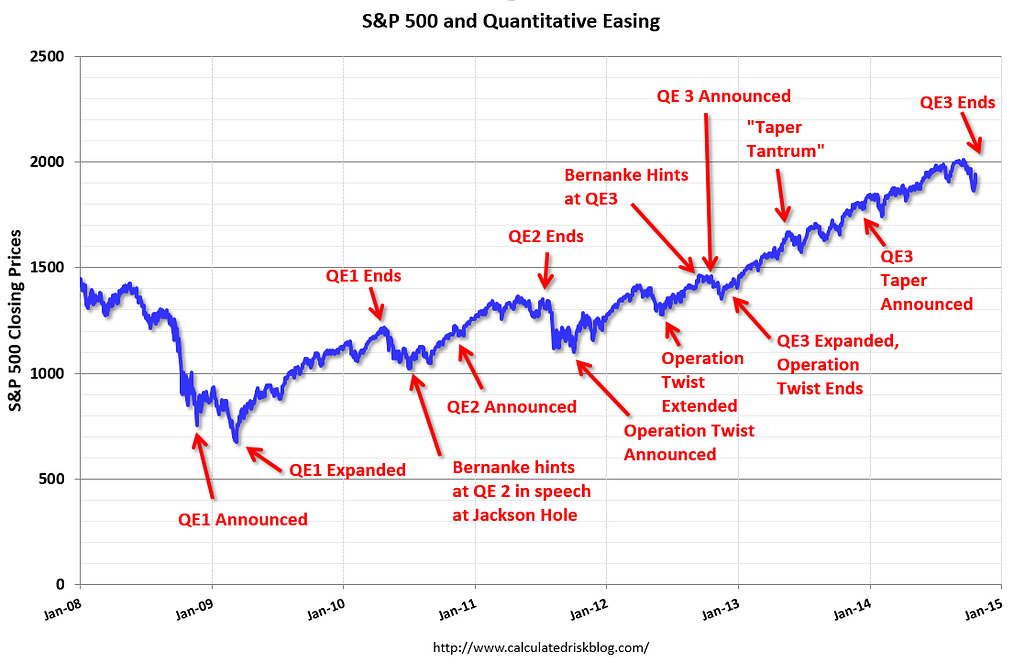
What is also relevant in this specific discussion is that we do tend to see that QE can lead to asset bubbles. A good example is the stock market. There are many different theories on how exactly QE will lead to rises in stock prices, but they all tend to be unanimous in that an expansionary QE will lead to an upward market, and quantitative tapering (reverse QE) will lead to a contraction in stock market prices. And that is also what we saw over the last years with the incredible rise of the DJIA, SPX, and Nasdaq, following multiple rounds of QE. And every time quantitative tapering was mentioned, markets would react accordingly.
When does Hyperinflation occur?
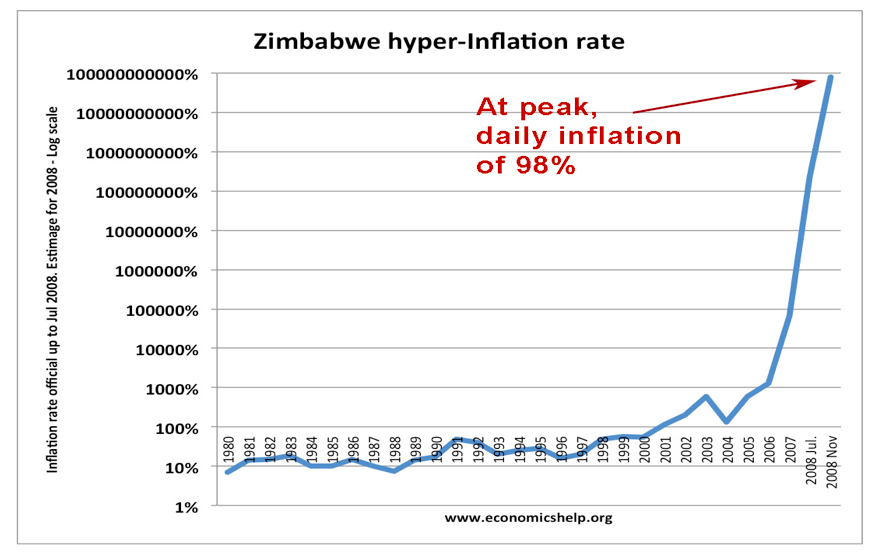
And finally, what is probably most important of all, is that in previous times, QE didn’t lead to hyperinflation as banks mostly kept the money themselves to clean up their balance sheets. However, if we look at two other examples in history, we see that if the printing of money is more tied to a desperate effort to maintain stability and prevent production from coming to a standstill, hyperinflation might be right around the corner. This is exactly what happened in Germany after WWI as well as during the 2000s with Robert Mugabe in Zimbabwe, where eventually a 1 trillion dollar bill needed to be printed. So if stimulus spending is done because of a real collapse in the underlying economy, it might be a whole other story.
And if we look at the amount of stimulus spending this time in the context of the Coronavirus, the Federal Reserve has purchased a staggering sum that exceeds all the previous QE-waves combined. And on top of that, the economy is partly coming to a standstill with many in lockdown. Money is sent to people and not just banks to make sure they can still pay their rent, etc. It remains hard to predict what will happen, also because we currently don’t know what tightening measures the Fed will install following these stimulus actions, but I’d argue there is at least some ground to be wary of the potential consequences.
Bitcoin
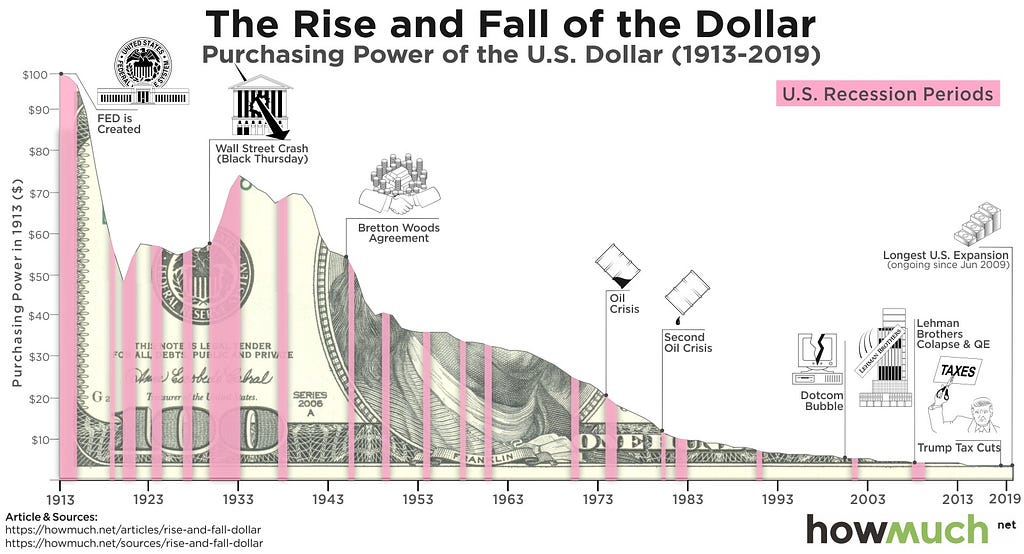
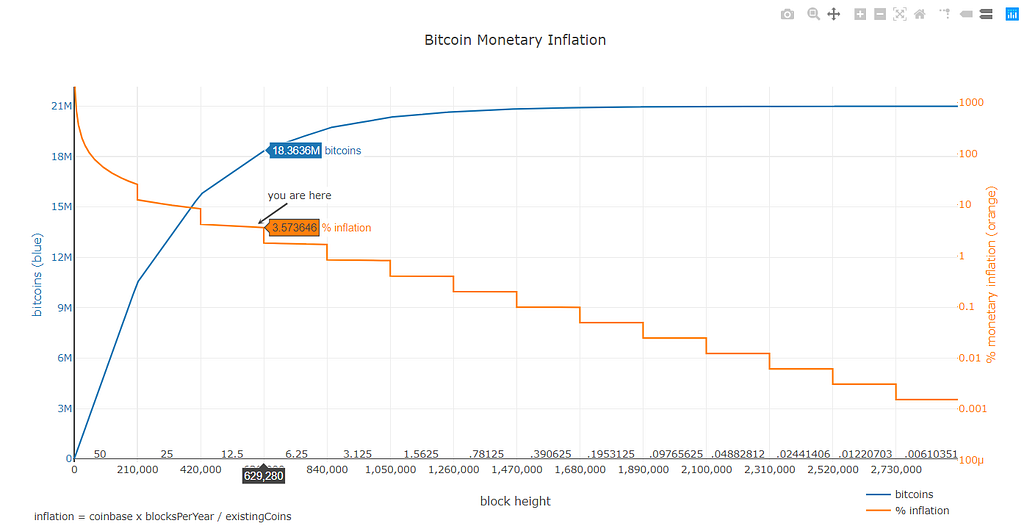
As for the effect on bitcoin prices, the contrast of ever ongoing new money printing and a whopping inflation rate if we look back to the last one hundred years versus the limited supply built-in into the bitcoin framework, it will be interesting to see how these two forces play out against one another. Bitcoin is in essence a deflationary asset, and market players will become increasingly aware of this. As it is already impossible for each of the 46.8 million millionaires in the world to own 1 bitcoin — as there are only 21 million in total — and in contrast over 4 trillion additional dollars will soon have been printed by the Federal Reserve and another 2T+ coming directly from the Trump Administration, it will be a fascinating future to witness from the first row. And arguably, just reading about a $6T stimulus check will push some to evaluate new means of store of value.
Ruben Merre
Constructive feedback and thoughts welcome as this is a widely discussed & discussable topic!
https://twitter.com/thecapital_io
The Impact of Record Stimulus Spending On Inflation and on Bitcoin Price & Demand was originally published in The Capital on Medium, where people are continuing the conversation by highlighting and responding to this story.
from The Capital - Medium https://ift.tt/3jalurK


0 Comments